

Astronauts from NASA‘s first crewed Artemis flight largely sidestepped a question about the diversity of the future astronauts assigned to the upcoming moon-landing mission.
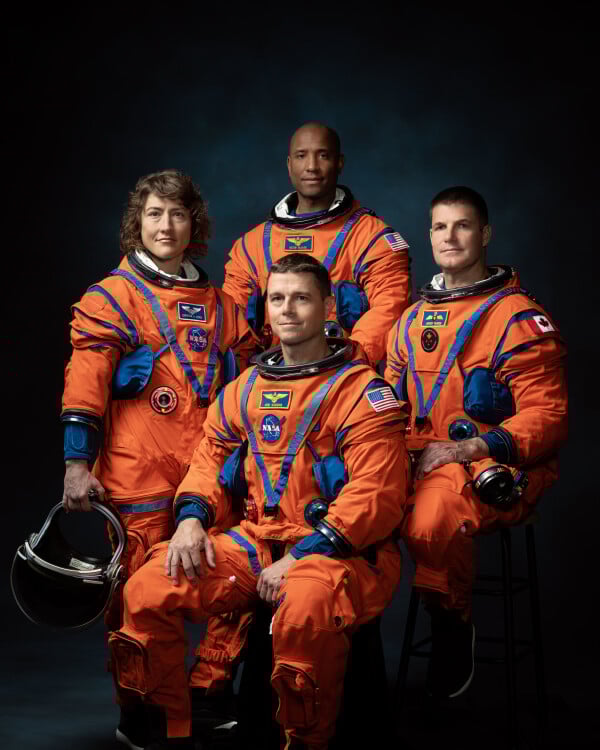
Speaking at a news conference days after their return to Earth, the Artemis II astronauts — Commander Reid Wiseman, pilot Victor Glover, mission specialist Christina Koch, and Canadian astronaut Jeremy Hansen — were asked whether the U.S. space agency should uphold its pledge to land the first woman and first person of color on the moon, a goal NASA has recently deemphasized.
The moment highlighted an issue NASA has avoided publicly clarifying. The Artemis program‘s first landing mission is expected as early as 2028.
“That’s a great question,” Koch told Mashable. “Our understanding of that statement was basically that the Artemis campaign as a whole will usher in an era where that is true, and that it will happen naturally because of our astronaut corps.”
Though Mashable sought each astronaut’s opinion, only Koch answered before the moderator moved on to another reporter’s question.
Before 2025, NASA had consistently described the first Artemis lunar landing as putting the first woman and first person of color on the moon. But over the past year, that language has largely disappeared from agency materials, following a White House executive order that curtailed diversity, equity, and inclusion programs across federal agencies. The directive labeled such programs “illegal and immoral.”
The Artemis II crew itself marked a milestone. The mission was the first deep-space flight not composed entirely of white men. Koch became the first woman and Glover the first Black person to travel beyond low-Earth orbit. Their assignment to the lunar flyby crew occurred in 2023, during President Joe Biden’s administration.
Credit: Josh Valcarcel
Both have downplayed the historical significance of their distinctions in past interviews, focusing instead on the technical goals of the mission. Leading up to the launch, they often wouldn’t elaborate on what those “firsts” meant specifically for women and people of color.
On Thursday, however, Koch seemed confident the milestone will happen, regardless of intention.
“The fact is we don’t have to try too hard to make that come true, to make that be the reality of this mission. We actually have to try harder to not make that true in the astronaut corps that we have.”
“The fact is we don’t have to try too hard to make that come true, to make that be the reality of this mission,” she said. “We actually have to try harder to not make that true in the astronaut corps that we have.”

Credit: NASA
Artemis II, a roughly 10-day mission around the moon and back, was NASA’s first crewed journey beyond low-Earth orbit in more than a half-century. The $4.1 billion test flight vetted the Orion spacecraft‘s life‑support, power, navigation, and steering systems. The mission took the capsule past Apollo‑era distances, reaching a farthest point of about 252,756 miles.
NASA has not yet announced crews beyond Artemis II. The next mission, Artemis III, will serve as a 2027 flight demonstration for docking Orion with commercially built lunar landers while in low-Earth orbit. Artemis IV is expected to attempt the program’s first lunar landing the following year.
Agency officials have said assignments will be based on mission needs but have not addressed whether earlier commitments about representation remain in place.