

-
Table of Contents
“AI: Unleashing the Artistry of Sculpting”
Introduction
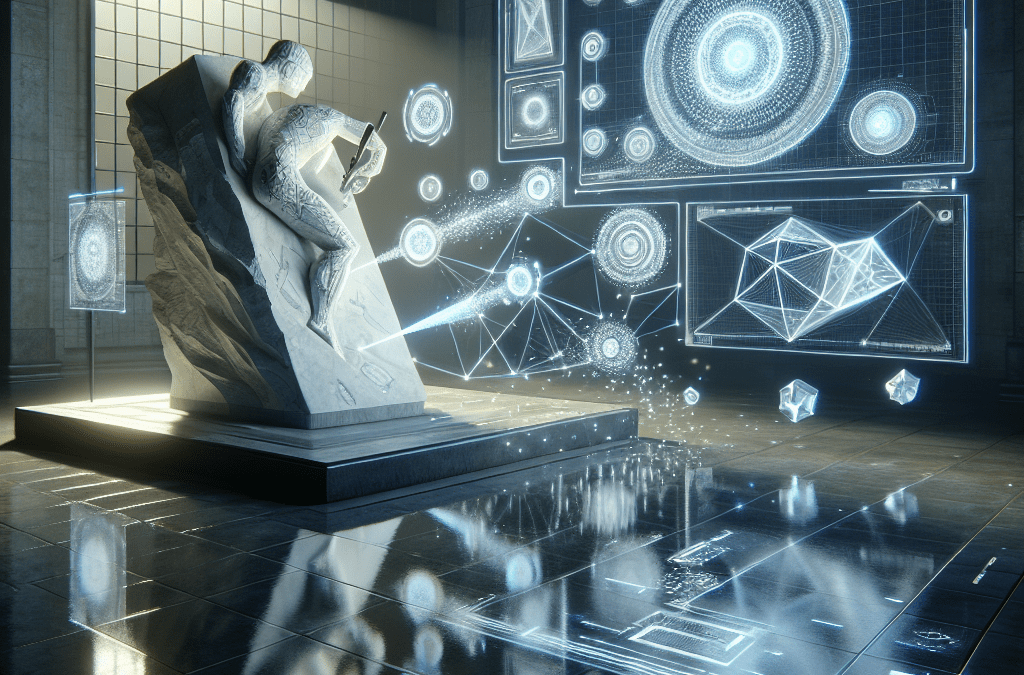
AI, or artificial intelligence, refers to the development of computer systems that can perform tasks that typically require human intelligence. These systems are designed to analyze data, learn from patterns, and make decisions or predictions based on the information provided. Sculpting, on the other hand, is the art of creating three-dimensional forms by shaping or manipulating materials such as clay, stone, or metal. In recent years, AI has started to make its way into the world of sculpting, offering new possibilities and augmenting the creative process for artists.
AI-Generated Sculptures: Blurring the Lines between Human and Machine Artistry
AI-Generated Sculptures: Blurring the Lines between Human and Machine Artistry
Artificial Intelligence (AI) has made significant strides in various fields, from healthcare to finance. However, one area that has recently caught the attention of both artists and technologists is the intersection of AI and sculpting. This emerging field is pushing the boundaries of what is considered traditional artistry, blurring the lines between human creativity and machine-generated art.
Traditionally, sculpting has been a deeply human endeavor, requiring skilled artists to shape and mold materials into three-dimensional forms. The process involves a deep understanding of anatomy, composition, and aesthetics. However, with the advent of AI, machines are now capable of creating sculptures that rival those made by human hands.
AI-generated sculptures are created through a combination of machine learning algorithms and 3D printing technology. The process begins with training the AI model on a vast dataset of existing sculptures, allowing it to learn the intricacies of different styles and techniques. Once trained, the AI can generate its own unique designs, taking inspiration from the dataset but also introducing novel elements.
One of the most fascinating aspects of AI-generated sculptures is the ability to blend different artistic styles. By analyzing a wide range of sculptures, the AI can identify common patterns and motifs, allowing it to create hybrid designs that combine elements from different periods or cultures. This fusion of styles results in sculptures that are both familiar and yet entirely new, challenging our preconceived notions of what art should look like.
Furthermore, AI-generated sculptures have the potential to push the boundaries of what is physically possible. By leveraging 3D printing technology, these sculptures can be created with intricate details and complex geometries that would be nearly impossible for a human artist to achieve. This opens up new possibilities for artistic expression, allowing for the creation of sculptures that were previously unimaginable.
However, the rise of AI-generated sculptures also raises important questions about the role of the artist in the creative process. Can a machine truly be considered an artist? While the AI is responsible for generating the design, it is ultimately the human artist who brings the sculpture to life through the physical act of sculpting. In this sense, AI can be seen as a tool or collaborator, augmenting the artist’s abilities rather than replacing them.
Moreover, AI-generated sculptures challenge our understanding of creativity itself. Can a machine truly be creative? While the AI is capable of generating unique designs, it lacks the emotional depth and subjective experiences that inform human creativity. The AI’s creations may be visually stunning, but they may lack the deeper meaning and personal expression that human artists bring to their work.
In conclusion, the emergence of AI-generated sculptures is blurring the lines between human and machine artistry. These sculptures challenge our notions of what art should look like, pushing the boundaries of creativity and artistic expression. While AI can generate designs that rival those made by human hands, it is ultimately the human artist who brings the sculpture to life. As this field continues to evolve, it will be fascinating to see how AI and sculpting further intersect, and how artists and technologists navigate the complex relationship between human and machine creativity.
Exploring the Intersection of AI and Traditional Sculpting
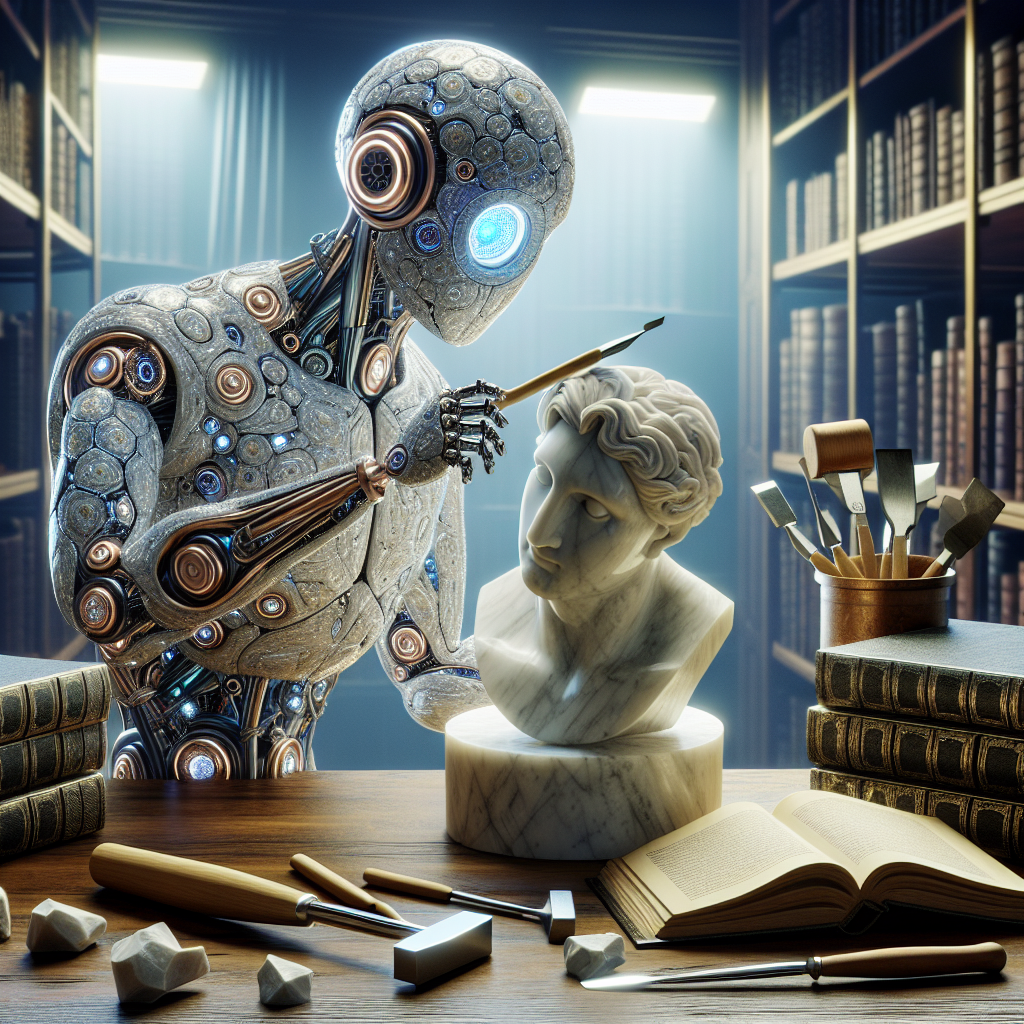
Artificial intelligence (AI) has been making significant strides in various fields, and the world of art is no exception. While AI has been primarily associated with digital art and computer-generated imagery, it is now venturing into the realm of traditional sculpting. This intersection of AI and traditional sculpting is an exciting development that opens up new possibilities for artists and challenges our understanding of creativity.
Traditionally, sculpting has been a highly skilled and labor-intensive craft that requires years of practice and expertise. Artists meticulously shape and mold materials such as clay, stone, or metal to create three-dimensional artworks. However, with the advent of AI, sculpting is undergoing a transformation. AI algorithms are being developed to assist artists in the creative process, offering new tools and techniques that were previously unimaginable.
One of the ways AI is revolutionizing sculpting is through the use of generative algorithms. These algorithms analyze vast amounts of data and learn patterns and structures. By feeding the algorithm with images of existing sculptures, it can generate new designs based on the learned patterns. This allows artists to explore new forms and shapes that they may not have considered before. The AI becomes a collaborator, suggesting ideas and pushing the boundaries of what is possible.
Another area where AI is making an impact is in the creation of digital models that can be translated into physical sculptures. Artists can use AI software to design intricate and complex sculptures that would be challenging to create by hand. The software can simulate the physical properties of different materials, allowing artists to experiment with different textures and finishes. Once the digital model is complete, it can be 3D printed or milled using CNC machines to bring the sculpture to life.
AI is also being used to enhance the traditional sculpting process. For example, artists can use AI-powered robotic arms to assist in carving and shaping materials. These robotic arms can be programmed to follow the artist’s movements, providing precise and controlled cuts. This collaboration between human and machine allows for greater precision and efficiency in the sculpting process.
While AI offers exciting possibilities for sculptors, it also raises questions about the role of the artist and the nature of creativity. Some argue that AI-generated sculptures lack the emotional depth and personal touch that comes from the artist’s hand. They believe that the imperfections and idiosyncrasies of traditional sculpting are what make it unique and valuable. However, others see AI as a tool that can enhance the artist’s vision and expand their creative possibilities.
Ultimately, the intersection of AI and traditional sculpting is a fascinating exploration of the boundaries of creativity. It challenges our preconceived notions of what it means to be an artist and opens up new avenues for artistic expression. Whether it is through generative algorithms, digital modeling, or robotic assistance, AI is reshaping the sculpting landscape. As technology continues to advance, it will be exciting to see how artists embrace and incorporate AI into their creative processes. The future of sculpting is undoubtedly an intriguing blend of human ingenuity and artificial intelligence.
The Impact of AI on Sculpting Techniques
Artificial intelligence (AI) has revolutionized various industries, and the world of sculpting is no exception. With its ability to analyze data, learn patterns, and generate new ideas, AI has had a significant impact on sculpting techniques. This article explores the ways in which AI has transformed the art of sculpting, from the design process to the creation of intricate sculptures.
One of the most significant contributions of AI to sculpting is its role in the design phase. Traditionally, sculptors would start with a rough sketch or a clay model and gradually refine it until they achieved the desired form. However, AI has introduced a new approach by using algorithms to generate initial designs based on specific parameters. This allows sculptors to explore a wide range of possibilities and experiment with different shapes and forms.
Moreover, AI can analyze vast amounts of data and identify patterns that may not be apparent to the human eye. By studying existing sculptures and art history, AI algorithms can generate designs that are influenced by various artistic styles and movements. This not only expands the creative possibilities for sculptors but also allows them to pay homage to the rich history of sculpture.
Once the design phase is complete, AI continues to play a crucial role in the actual creation of sculptures. Traditionally, sculptors would rely on their manual skills and tools to shape the material, whether it be clay, stone, or metal. However, AI has introduced the concept of robotic sculpting, where machines equipped with AI algorithms can carve and shape materials with incredible precision.
Robotic sculpting offers several advantages over traditional methods. Firstly, it allows for the creation of highly intricate and complex sculptures that would be extremely challenging, if not impossible, to achieve by hand. The precision and accuracy of the machines ensure that every detail is captured, resulting in flawless sculptures.
Furthermore, robotic sculpting can significantly reduce the time and effort required to create a sculpture. While traditional sculpting can be a labor-intensive process that takes months or even years to complete, AI-powered machines can work tirelessly and efficiently, completing sculptures in a fraction of the time. This not only increases productivity but also allows sculptors to focus more on the creative aspects of their work.
However, it is important to note that AI is not replacing human sculptors but rather enhancing their capabilities. The collaboration between AI and sculptors is a symbiotic relationship, where the technology provides new tools and possibilities, while the human artist brings their unique vision and creativity to the process. AI is a tool that empowers sculptors to push the boundaries of their art and explore new horizons.
In conclusion, AI has had a profound impact on sculpting techniques, revolutionizing the design process and introducing robotic sculpting. From generating initial designs to shaping materials with precision, AI has expanded the creative possibilities for sculptors and allowed them to create intricate and complex sculptures. The collaboration between AI and human artists is a testament to the power of technology in enhancing artistic expression. As AI continues to evolve, it will undoubtedly continue to shape the world of sculpting and inspire new generations of artists.
Conclusion
In conclusion, AI has the potential to revolutionize the field of sculpting by offering new tools and techniques that can enhance the creative process. It can assist artists in generating complex designs, improving precision, and exploring innovative ideas. However, it is important to recognize that AI should be seen as a tool to augment human creativity rather than replace it entirely. The unique human touch and artistic intuition are still essential in sculpting, and AI should be used as a complementary tool to push the boundaries of artistic expression.